Sunday, March 15, 2015

Snorkeling in Spain

I do not have any of my own pictures for this, because I did not have an underwater camera. But I will describe and also give some pictures of what I saw from the internet. I do have a picture of the boat I was on though.
2014-08-03 18.59.27_edited
I went snorkeling and I was very very excited because here in Wisconsin there is no chance of that happening and actually seeing cool fish or coral in our lakes. I put on my tube and my goggles and hopped in. Now something I must say. The water is incredibly salty, like one of those salted pretzels you can buy covered with salt times two. It starts to (at least felt like) it eroded my tongue. I had been swimming for a little bit, and my eyes were already stinging. I thought though that the goggles and snorkel would protect me from the salt. I was wrong, and snorkeling turned out to be much more difficult than it looked. The goggles I had, kept on leaking and getting water into my eye, and since there were waves taller than the little snorkel and I couldn't get my snorkel to stay above a 45 degree angle, a lot of water came in. So about every thirty seconds I was coughing up salty water that hurt my tongue and made it hard to keep a steady pace of swimming.
While this was happening, we were swimming to some coral. We swam for a good 15 minutes, except once we got there, my host family said you couldn't touch the bottom because of sea urchins and octopuses in the weeds. That sounded cool to see, but I was tired, so I found a little rock and kind of stood on it with a couple of toes. Once I got a break, I was able to here be able to fix and empty my goggles everytime I needed to, so I got to see some really cool and colorful fish. Here are some pictures:
G49eYfY4yO
http://exoticsfish.blogspot.com/2013/02/spanish-hogfish.html
SpanishHogfish
http://saltwater.tropicalfishandaquariums.com/Wrasses/SpanishHogfishPhoto.asp
I am sorry the fish pictures are brief, but I can't remember which other ones I think I saw, there was a pretty green one, and also a lot of big blue ones, by big I mean largest was a foot, they ranged from a few inches (10cm) to a foot, (30cm).
As a tip: practice snorkeling before you do it, you'll be able to avoid salty water in your lungs and bloodshot eyes. (If only I had known...)

Friday, February 27, 2015

Spain Food Post #1: Spanish Coffee


key: 
brown: coffee
white: milk
off-white (bonbon and cafe con leche): condensed milk
orange: alcohol

When I was in Spain at my host family's house, I saw a really elegant looking coffee but it was a normal everyday coffee to them.

Image result for spain coffee
http://images.budgettravel.com/1111coffeespain1-10262011_horiz-large.jpeg


The first thing I noticed about it, is that it is layered with condensed milk, coffee, and then foam. I soon came to know that it is a normal everyday type of coffee, and this one specifically is called bombon. This one became my favorite, because I can only stand the taste of coffee when with a lot of sugar and milk, and in this case condensed milk. (Condensed milk is much sweeter.) There are many different types with different layers as seen in the above diagram and they all are quite common. In a cafe or a restaurant, they will bring it to you like this, and then you stir it so it all mixes up.

The second thing is that it comes in tiny cups in contrast to the United States where coffee comes in large cups. This is partly due to the fact that they drink espresso, and the "normal" coffee is barely ever seen there. So when you order a coffee in the morning, or anytime, do not expect it to be big at all. 

In the United States, we have a coffee machine called a Keurig. It is where you buy little sealed plastic cups filled with different coffee or tea flavors, put them in a machine, and then the machine makes coffee for you. From what I have seen, Europe has something like this but it is called Dolce Gusto, run by Nescafe. In Spain specifically (maybe somewhere else, I don't know), they have something called Nespresso, also run by Nescafe. To make the Nespresso, you put whatever you want on the bottom; milk, cream, condensed milk, and then put it on the machine which puts on coffee and also foam. One thing I noticed about drinking coffee that looks nice in small cups, is that it makes you feel like you are drinking something more special. Here are some comparisons of Keurig and Nespresso. (The pictures are supposed to be right next to each other, in comparison but it is not working. Sorry)
Image result for Nespresso
                         Nespresso Machine
http://kimberlytaylorimages.com/wp-content/
uploads/2013/02/nespresso.png
Image result for keurig
Keurig machine

http://www.gadgetreview.com/wp-content/uploads/2011/07/keurig_platinum.jpg


Image result for nespresso capsules
Nespresso capsules

http://www.ablogtowatch.com/wp-content/
uploads/2012/11/Coffee_capsules_-_anieto2k.jpg
Image result for keurig k cups
K-cups

http://www.ablogtowatch.com/wp-content/
uploads/2012/11/Coffee_capsules_-_anieto2k.jpg


Image result for nespresso capsules
Nespresso capsule box

http://ecx.images-amazon.com/images/I/71R1cG-VrZL._SL1500_.jpg


Image result for keurig k cups
K-cups box
http://img.auctiva.com/imgdata/1/5/1/1/6/5/5/
webimg/456146081_o.jpg
             And here's a last picture for Nespresso that I feel needs to be shared:

It is just so fancy. When you buy them they even give you a bag that looks fancy and the stores look high-end. 

http://img.timeinc.net/time/asia/magazine/2011/0307/360_nespresso_0307.jpg
All in all, Nespresso is elegant, and really nice compared to the Keurig machines we have, and Spain has coffee that I like; 70% milk, cream, & sugar, and only 30% coffee. If this is also your coffee taste, if you can, choose Spain as your next vacation destination.

Comment about your country's coffee preferences! :)


Tuesday, August 26, 2014

Exploring Spain: La Caseria

Hello. A few days ago, my host family told me we were going to a vacation home for a week. I was expecting a normal house just on a beach, but oh was I mistaken. We were driving up and then they start pointing and saying "There it is!" and I look and I see this:


This looks like a small castle but it is officially called a fortified house. It was built in the early to mid sixteenth century on top of another structure. They have found Roman artifacts and parts of the foundation dating back to the second century. It has been used throughout history as an extension of an estate, barracks, animal and farm tool storage, and then was abandoned. It was redone throughout a period of 10 years by a couple, a lawyer from England and an artist. It won an award from Europa Nostra in 2009, which selects the best buildings that were restored. Inside the house, they had pictures of what it was like before, and it was literally in ruins. All of the roofs were caved in, the walls were in really bad shape, and everything had fallen apart. If you look at the picture of the church below, there was absolutley no roof, it was really just walls that were half as tall as they were supposed to be.

This is what it looks like inside (some of the rooms and the walled-in part)


I tried to find more pictures of the inside online, but I couldn´t. I´m going to keep on searching though. 

I also found this plant while I was walking around. It was literally in the middle of nowhere in a dried up fountain.

Another picture that has no educational value: I found real grass!


Sunday, August 24, 2014

Bathrooms (The Stalls)

There is a large difference in bathrooms between the United States and the parts of Europe I've been to. (Slovakia, Germany, Spain, Vienna (Austria) and also Japan. There are two main differences: the bathroom stalls themselves, and the toilets. First up, the stalls. Comment which stall style is in your country.

        The stalls in the United States (and maybe other countries I haven't been to) you can pretty much see everything that is happening inside the stall by looking through the crack between the stall door and the divider part.

I know it does not look like much of a problem, but it soon becomes one. As you walk by, even if you don't want to, you get an angle view of what is going on. It ruins your privacy. On top of that, the bottom and top part of the door are cut off, leaving you with a foot, (30cm) of sight of your feet and at times the top of your head when you stand up. So if anything embarrassing drops on the floor we all see it. Thank you public and school bathroom stalls.


http://www.robertbrooke.com/images/Public-Restroom-Partitions-Parts-and-Accessories.jpg

        Now the ones in the countries I mentioned are a luxury of privacy compared to these. Most of 
the time they completely shut with this nice rubber seal, so no one can see through the crack, and they also usually skim the bottom of the floor, so no one can see your pants and embarrassing underwear. 


http://ciee.typepad.com/.a/6a010536fa9ded970b017d3cfb4651970c-pi

I'm sorry about the blurriness, but this was one of the best ones on Google that shows what I'm trying to say. Also I couldn't take a picture of a bathroom because it would be very awkward for the people inside. 


Friday, August 22, 2014

Granada

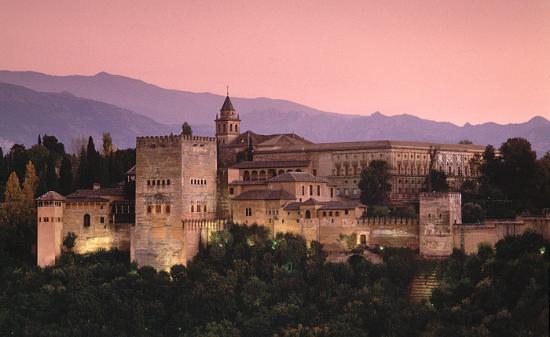
I traveled to the city of Granada in Spain. It is a tourist hotspot because of its rich history dating back to the 8th century. It was originally inhabited by the Iberians but was then conquered by the moors, which is the more renowned part of their history. They have many buildings one of which is the Alhambra. It is also famous for being the last Arabic city to surrender to the Christians during the reconquista of Spain. Just a little fun fact, Washington Irving did a lot of his writing there.

Photos of the Alhambra:


http://media-cdn.tripadvisor.com/media/photo-s/00/13/19/5a/the-alhambra.jpg


http://patternity.org/wordpress/wp-content/uploads/2010/04/PATTERNITY_GW4_GranadaThe-Alhambra.jpg


http://media-cdn.tripadvisor.com/media/photo-s/01/91/5a/23/the-alhambra.jpg


Friday, August 1, 2014

Spain trip!

Hi! I just flew to Spain two days ago and am currently with my host family. The trip was long but I love plane flights where I just sit and watch movies. The food was fine although they had some type of squid salad that made me feel a little weird. Now having my first impression of southern Spain, here are some aspects I have observed.

1. They go to bed late and wake up late. To put it in perspective, they stay up until 2, and them wake up around 11-12:30.

2. With the time a bit diferent, so are the meals. Breakfast is at around 12 in the afternoon, lunch is around 3, and dinner is at around 10:30.

3. They don't have air conditioning. Instead they have a lot of open windows and areas so as to give air flow. But no air conditioning.

4. In the area where I am it is 90% there to being a complete desert, which means fake grass, because real grass is too hard to grow.

5. They are more relaxed about clothing, especially on beaches.

6. The common thing to do when saying hello and goodbye is to give one air kiss on one cheek and then one on the other, and this applies to everyone including strangers you may have just been introduced to 5 seconds ago. (Personal experience) Here's a picture if my explanation didn't make a lot of sense.


Monday, June 30, 2014

On chain/fast food restaurants in foreign countries

                When I went to a foreign country (Japan) for a short amount of time, many people told me to avoid eating at Mcdonald's, or the Japanese KFC. This was so that I could experience the local food more. But I have my own view. First off as my rule for around the world (off of Japan now), YES eat at foreign restaurants and cafes. It is very beneficial in learning about the culture and also in the eating customs as every country usually eats a little differently. Generally the differences center around utensils and table manners.

               On the other hand, you can also learn just as much from fast food or chain restaurants. If the food tastes significantly less salty, then you know they don't eat that much salt in their food in general. Another major difference to be observed is the portion sizes. If you see that the small for a drink is drastically smaller then the one from your home country, an important fact becomes apparent about their culture. They may avoid over-indulging at most meals and probably value health because of the small sizes of soft drinks, which I found to be in Japan (and through research Australia) compared to the United States.


            950ml : 650ml             675ml : 500ml            500ml : 300ml           375ml

https://www.flickr.com/photos/okinawa-soba/6004485662/
                   
                If the portion sizes are smaller in general then you know you may need to keep a stash of snacks if you are usually very hungry. If people make a group by the cash register or if they make tidy lines this can help with boarding trains or subways or anything in the future that has to do with organization or ways of doing general activities. In  other words, orderly society vs. chaotic society.

                 By noticing the way people eat their food (but not in a creepy way), you can learn the basics of what is appropriate and what isn't such as burping, blowing your nose, or other basic manners which are still observed in fast food restaurants. So if you know those, you won't make those mistakes that can be considered very rude and even worse if done in a formal restaurant, and that a foreigner should learn to avoid before going there (but many do not.) Along with having a crash course in another countries' culture and eating habits, it is also fun to just try the food and compare it to the food from your home country.

                 In conclusion, most of the time, go to local restaurants because you can also experience the culture, the best food, and have a much more friendly language-learning  environment. Don't just shove fast food aside, make it a scarce occurrence, but it can be a very helpful introduction to a foreign society.